Radon Detectors for the Home: What Health Canada Recommends
Last updated: By RadonIndex Research Team
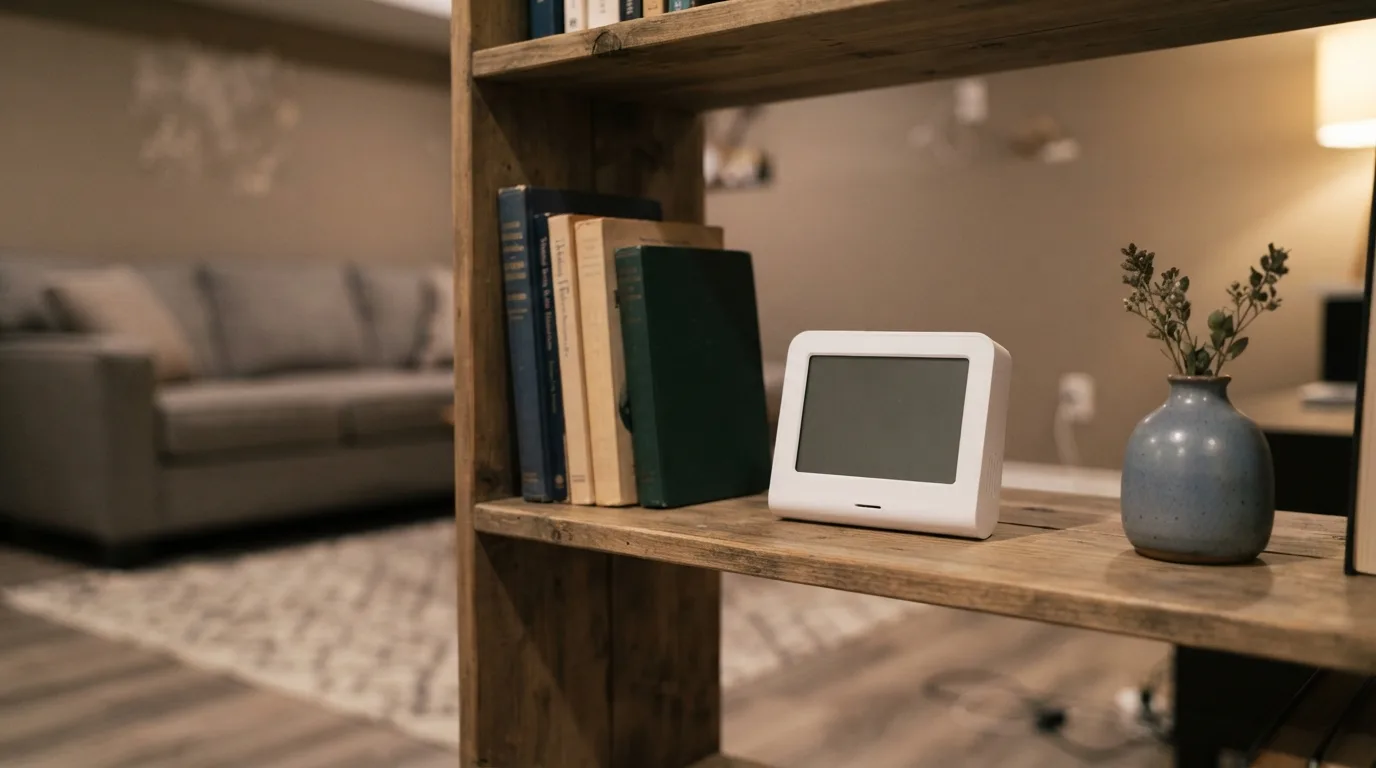
What kind of radon detector does Health Canada accept?
Health Canada recommends 2 kinds of long-term device, passive and active, "provided they are C-NRPP approved devices". Health Canada's Guide for radon measurements in homes says it "recommends two types of passive devices, alpha track detectors and electret ion chambers". An alpha track detector (ATD) is the small kit you mail to a lab. An electret ion chamber is a reusable plastic chamber holding a charged disk, and the drop in its charge is read with a calibrated reader, usually by a qualified laboratory.
The active side is narrower. The same guide says "The only active measurement devices recommended by Health Canada for long-term measurements are electronic radon monitors (ERMs)". An ERM is a powered device that keeps measuring and shows results on a screen, in a phone app or on a web dashboard. The guide also says "Health Canada strongly recommends testing only with devices" that appear on the C-NRPP list. C-NRPP publishes the list of devices that passed. Health Canada recommends the list.
Buying a mail-in kit is covered in the guide on where to get a radon test kit in Ontario.
How is an electronic monitor different from a mail-in kit?
A monitor reports as it goes, while a passive detector gives one number at the end. Health Canada's measurement guide says "Passive devices can only provide an average value of the indoor radon level over the test period". An ERM takes readings at regular intervals. Some also log temperature, humidity and pressure.
That makes a monitor reusable. The guide says ERMs "can be used to test multiple locations" as long as the device is reset before each new spot. Health Canada's brochure on using an electronic radon monitor, published 9 February 2026, tells owners to leave it in place for 3 months. After that, it says to "Keep using the ERM for continuous monitoring or share it with family and friends".
Price is the other difference. Homeowner.ca puts C-NRPP-approved monitors at $200 to $350 per device and says long-term kits, which are mailed to a lab for analysis, "typically cost $30 to $60". These are published Canadian ranges, not quotes from companies in the Greater Toronto and Hamilton Area (GTHA). The full rows sit on the radon testing cost page.
Which monitors are on the C-NRPP consumer-grade list?
The C-NRPP consumer-grade monitor page, as checked on 14 October 2026, marks 6 monitors as approved. It says it gives "an unbiased performance-based comparison". It also links a 2025 report. The next paragraph copies the approved rows as C-NRPP lists them. RadonIndex has not tested any device and does not rank them.
In C-NRPP's order, the 6 approved monitors are the Airthings Corentium Home (battery; the long-term average shows on the monitor display), the Airthings View (battery or plug-in USB-C; shown in the app), the Aranet RN+ (battery; shown in the app, or on the display depending on a setting), the Ecosense EcoQube (plug-in; shown in the mobile app), the Ecosense RadonEye RD200 (plug-in; shown in the mobile app) and the SunRadon Luft (plug-in; shown in the app).
The same page lists 14 entries as not approved. Of those, 10 carry the note "Recalled by Health Canada". C-NRPP also says the consumer devices it tested "cannot be professionally calibrated and are not approved by C-NRPP for use by radon measurement professionals". The list changes over time, so check the live page for the exact model before you buy.
What happens when Health Canada recalls a radon monitor?
In the recalls checked for this guide, Health Canada found the devices gave wrong readings and told owners to stop using them. Its 7 May 2025 warning on detectors sold on Amazon.ca names the Funny Kitchen Home Radon Detector and the Boyd Gresham "Toolhome" Radon Detector. It says sampling and evaluation by Health Canada's Radiation Protection Bureau found "these products measure inaccurate radon levels and likely pose a danger to human health or safety".
The instructions are plain. Owners should "immediately stop using them and dispose of them in accordance with municipal electronic waste requirements". The 15 May 2025 Hanchen Home Radon Detector recall adds that the Canada Consumer Product Safety Act "prohibits recalled products from being redistributed, sold or even given away in Canada".
Both notices give the same advice. "Consumers should only purchase electronic radon monitors that have passed performance testing by the Canadian National Radon Proficiency Program (C-NRPP)". That suggests a result from a recalled device needs a new test on a listed one.
Which number on the screen counts?
Only the long-term average counts. Health Canada's measurement guide says "Only the long-term average value should be used for comparing to the guideline". The guide notes that monitors often show several time periods at once. C-NRPP says monitors "each have a different method of averaging the data" and recommends reading the maker's user guide.
Some monitors show no long-term average at all. For those, Appendix III of Health Canada's guide shows how to work it out from the stored readings. With readings taken at equal intervals, it is a plain average of all of them.
Short spikes can happen. In its questions section, Health Canada's measurement guide answers an owner who saw values above 200 becquerels per cubic metre (Bq/m3) before 91 days had passed. The answer is that the guideline "applies to your average annual radon level, not short-term measurements", and that decisions should rest on tests "at least 91 days in length". A second answer adds that "Decisions should be based on the longest and most representative average you have". What that guideline means for a finished result is covered in what the 200 Bq/m3 guideline means.
What can go wrong with data storage, power and batteries?
A monitor can lose the readings a long-term test needs, through full storage or a power cut. Health Canada's measurement guide warns that "Some ERMs have less than 3 months of data storage space". Such monitors "may require periodic data downloads" to collect enough data for a long-term test. If yours holds less than that, set a reminder to download the readings.
Power is the second risk. The guide asks owners to "reset ERMs and install new batteries" before a test starts. It notes that "Some battery operated ERMs do not preserve data in the case of loss of power", and that a test with damaged data may have to start over.
The same Health Canada guide says a plug-in monitor "may have limited placement options" because it needs a socket. If readings sit near the limits in the manual, the guide says to contact the maker. It adds that a device past its range may show the same value again and again. Where the monitor should sit is covered in how to test a GTHA home for radon.
How long does a home radon monitor stay accurate?
Health Canada's measurement guide suggests that users "consider replacing ERMs five years after their purchase date" unless the monitor is "recalibrated to manufacturer specifications". The guide notes that "Many ERMs targeted at the public cannot be recalibrated after purchase".
The guide says professional-grade ERMs "should be recalibrated by the manufacturer" or an accredited facility "when required". C-NRPP runs a separate approval list for them. That suggests a home monitor stays accurate for a limited time, so write down the date you bought it.
What should you ask a GTHA company that tests with a monitor?
Ask which device it uses and which C-NRPP list that device is on. In the index of 35 companies in the GTHA, 31 name radon testing on their own website and sit in the radon testing category. Of those 31, Google Maps labels 16 as a home inspector or building inspector. The index does not record which device any company uses.
Certification belongs to a person, not a company. In the index, 5 of the 35 companies say on their own website that they are C-NRPP certified. The site did not check any of those statements, as the methodology page explains. Ask for the person's certification number and enter it on the C-NRPP certification check before you book.
Four questions are worth asking before a company sets up a monitor in your home. First, the make and model: is it on the C-NRPP professional device list, or is it a consumer-grade monitor? Second, calibration: when was it last calibrated? The Health Canada guide lists the calibration date of a professional-grade ERM as report information. Third, test length: will the report give a long-term average, and over how many days? Fourth, the data: who downloads the readings, and what happens if the power fails?
Frequently asked questions
Can I use any radon monitor sold online?
- You can buy one, but Health Canada's recall notices say consumers should only buy electronic radon monitors that have passed C-NRPP performance testing. Before you order, open the C-NRPP consumer-grade page and match the exact make and model. A similar-looking device with a different model name is a different device, and several not-approved entries on that page are marked as recalled.
My monitor showed a high reading after 2 days. Should I call a mitigation company?
- Not on that reading alone. Health Canada's measurement guide says the guideline applies to the average annual radon level and that corrective action should rest on tests at least 91 days long. Leave the monitor running, note the date you started and compare the long-term average once the test is complete. The same guide says to base decisions on the longest and most representative average you have.
What do I do with a radon detector that has been recalled?
- Health Canada's recall notices tell owners to stop using the device immediately and dispose of it under municipal electronic waste rules. The Hanchen notice adds that the Canada Consumer Product Safety Act bars selling, redistributing or giving away recalled products. So the device should not go to a garage sale or a neighbour. Start a new test with a device from the C-NRPP list.
Does a GTHA radon company use a consumer monitor or a professional one?
- The index does not record which device any company uses, so ask. C-NRPP says consumer-grade monitors are not approved for use by radon measurement professionals, and it keeps a separate list for professional-grade devices. Ask for the make and model, its last calibration date and the planned test length, then check the person's certificate on the C-NRPP certification check.