Where to Get a Radon Test Kit in Ontario
Last updated: By RadonIndex Research Team
The short answer
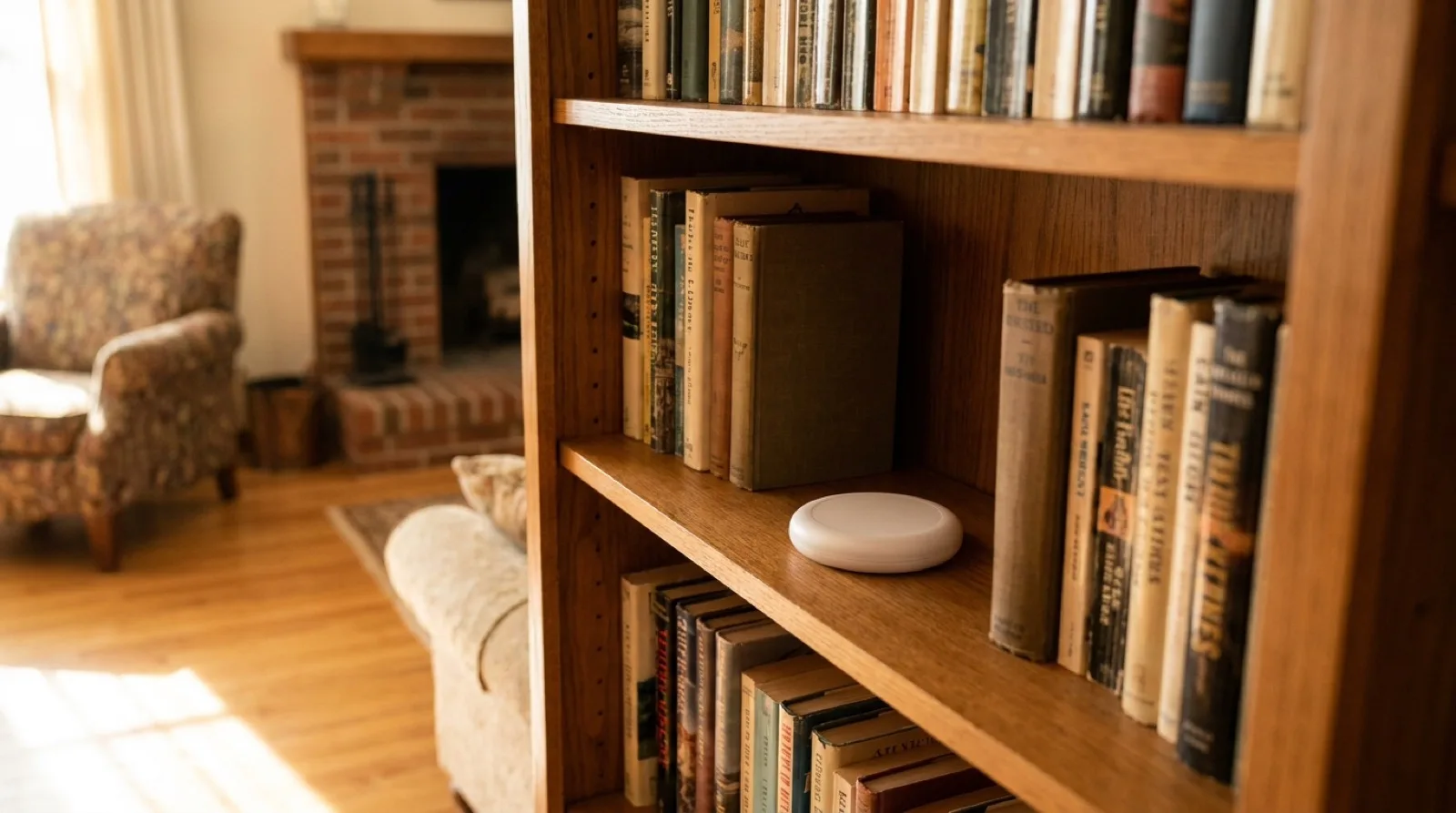
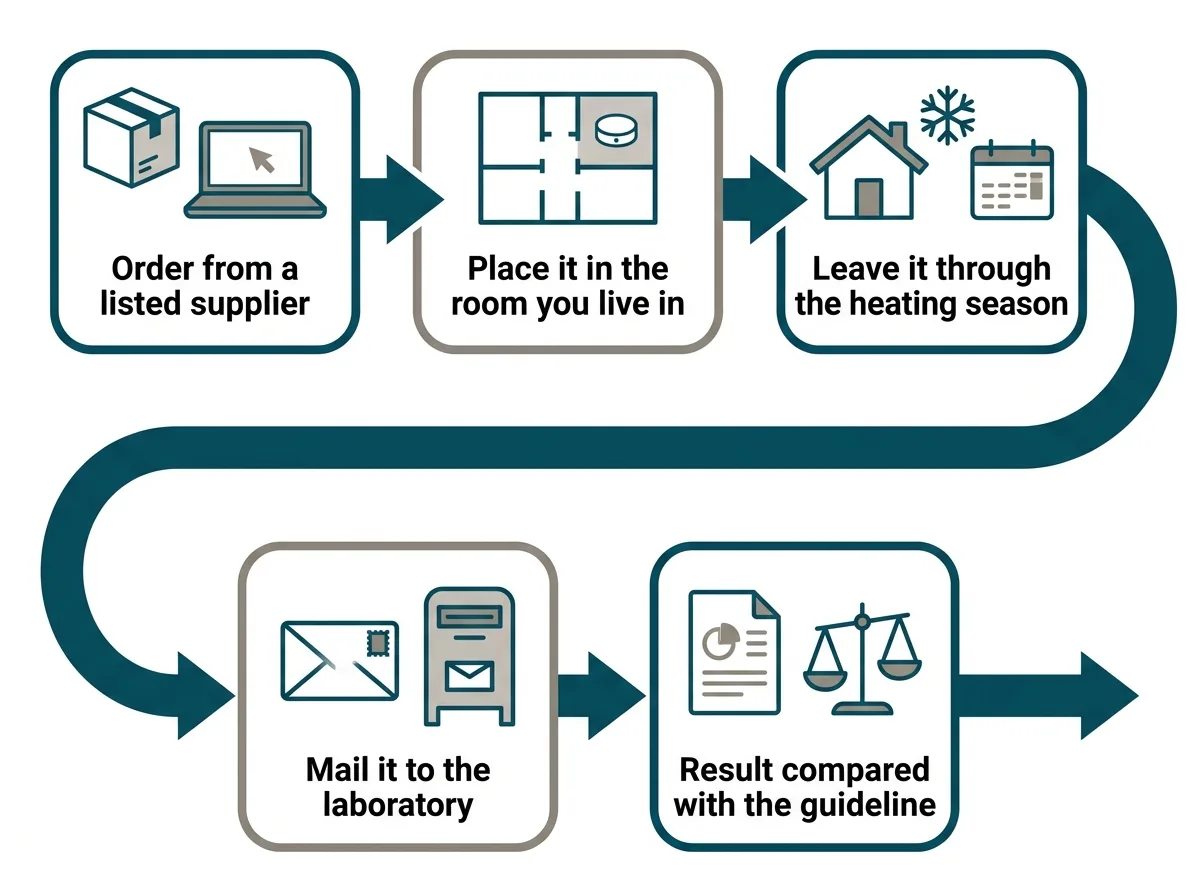
Order a long term alpha track kit from a laboratory that does radon analysis. Place it in the lowest room you actually live in, leave it for at least three months over the winter, then mail it back. An alpha track kit is a small plastic detector that records the marks radon leaves on a film inside it, and the laboratory reads that film to give you a number.
The national organisation that maintains the supplier list is Take Action on Radon, and it publishes a page for radon test kits in Ontario. Everything below is detail on how to choose between the routes it lists, and what the kit has to be for the result to mean anything.
One warning first, because it is the mistake that wastes the most money. A radon test kit is not a smoke detector and not a carbon monoxide alarm. It does not warn you about anything while it sits there. It records an average over the months it is exposed, and the number arrives afterwards from a laboratory.
The supplier route
Take Action on Radon's Ontario test kit page lists nine suppliers by name: Lex Scientific, Canada Radon, Algoma Radon Testing, The Evict Radon National Study, RadonTest.ca, Pinchin Ltd., AGAT Laboratories, Mr. Radon Inc. and ECOH Management Inc. Each entry carries a phone number and an email address, and the page states the Canadian guideline as "200 becquerels per cubic metre (200 Bq/m3)".
We checked that list against our own records rather than assuming a relationship. Two of those nine are also companies in this directory: Canada Radon and ECOH Management Inc. That is a coincidence of coverage rather than a recommendation, and it is worth stating exactly what it is and is not. It means two GTHA companies we already record appear on a national list of kit suppliers. It does not mean we endorse them, rank them for this, or have any commercial relationship with them, because we have none with anybody.
The reason to use a listed supplier is that the kit and the laboratory analysis come from the same place. The result comes back already read against the guideline, rather than as a raw count you have to do something with. That is the whole product.
The research route
The Evict Radon National Study is a Canadian university led project, and it appears on Take Action on Radon's Ontario list alongside the commercial laboratories. It sells a kit at cost rather than at a market price, and your result is added to its research dataset.
The figure is $53.99, taken from the study's own FAQ, which says it offers "an at-cost kit for $53.99 through the Evict Radon National Study". That sentence is one of the rows our radon testing cost guide holds. An automated price check re-finds it in the cached source text every time this site builds, so it is not a number we typed once and forgot.
What you are trading is a small amount of privacy about your result for a slightly different kind of transaction. If contributing to Canadian radon data appeals to you, this is the route that does it. If it does not, the commercial laboratories give you the same measurement.
Free kits, and who they are actually for
Free radon kits exist in Canada, and it is worth being precise about them rather than raising hopes.
The standing programme is Take Action on Radon's White Ribbon Radon Testing Program. It "provides free radon test kits for individuals who have been diagnosed with lung cancer as well as their family members". That is a specific eligibility, written for a specific reason, and if it describes you the kit is there to be claimed.
Beyond that, free kits in Ontario tend to appear as time limited local distributions run through public health units, libraries and municipalities rather than as a permanent entitlement. They come and go, and we are not going to list ones we cannot currently verify are running. The honest check is to ask your local public health unit whether anything is open at the moment. Take Action on Radon's own pages are the other place to look, because that is where these programmes are announced.
What we would not do is wait. At the price Homeowner.ca gives for a long term kit, waiting a year for a free one costs more in delayed information than it saves.
What to check on the box before you buy
One thing matters more than brand, price or where you bought it: the detector has to be a long term one.
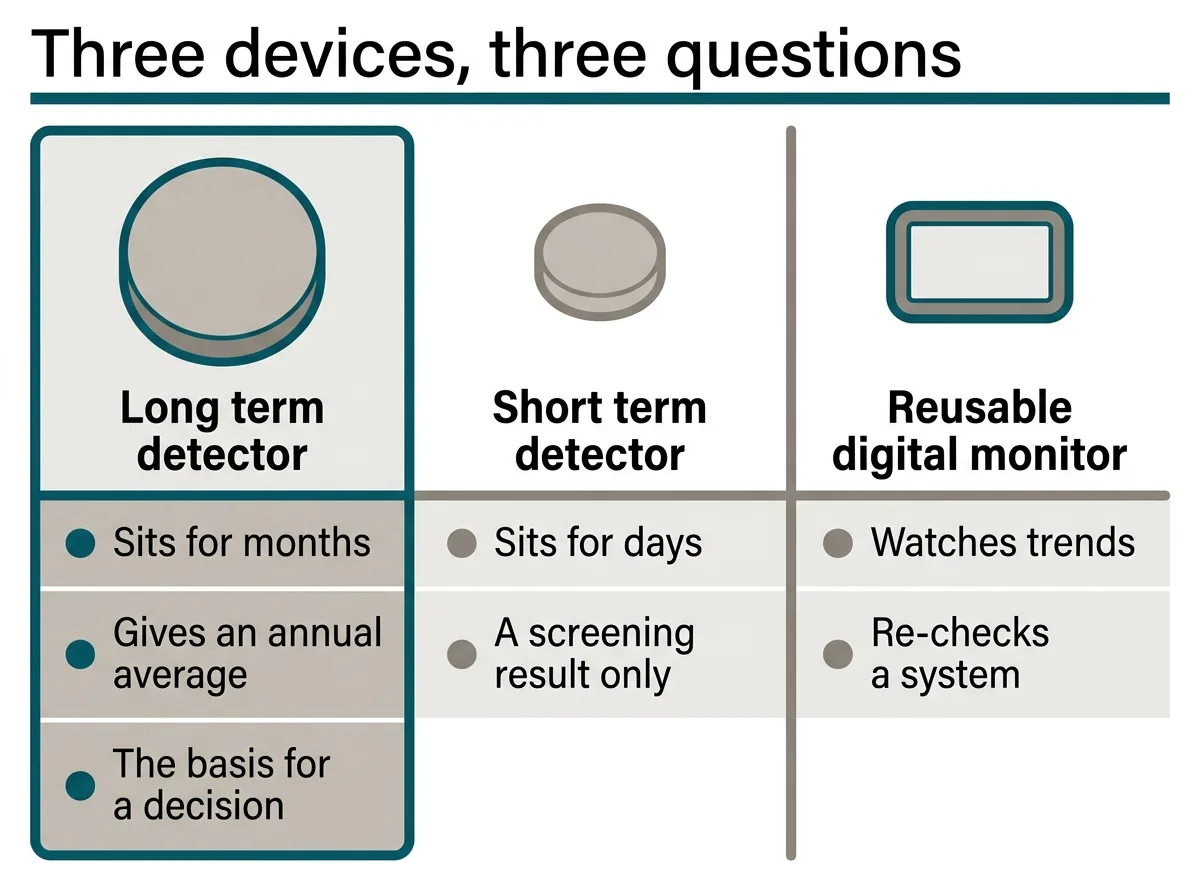
Health Canada's guide for radon measurements in homes is blunt about the alternative. "Short-term ATDs are available, but short-term measurements are not appropriate for informing mitigation decisions", and "Health Canada recommends making decisions for corrective action based on tests which are at least 91 days in length". A short term kit is not a cheap version of a long term kit. It answers a different and much weaker question.
So the checks, in order. Is it rated for a placement of at least three months, and ideally up to twelve. Does the price include the laboratory analysis, or is that billed separately when you mail it in. Does it come back as a result compared against the Canadian guideline. And is there a Canadian return address, because a kit that has to cross a border twice spends part of its life in a mail system rather than in your house.
Continuous digital monitors are a different purchase. Homeowner.ca prices these at $200 to $350, and they are genuinely useful for watching how a level moves or for checking a mitigation system. They are the wrong first purchase for deciding whether to spend thousands on mitigation, because that decision still rests on a long placement. Our guide on how to test a home for radon in the GTHA covers the difference properly.
Where to put it, and what to do with the number
Placement is prescribed and it is easy to get wrong in a way that quietly ruins the result.
Health Canada asks for the detector "in a room on the lowest level of the home with a normal occupancy area". It also asks for "at least 30 cm, or 1 ft, above the floor" and "at least 30 cm from walls or ceilings". Read the first of those carefully. A normal occupancy area is the part of the home people actually live in, so the rule says the lowest level you normally occupy, not the lowest level that exists. An unused crawl space or a cold cellar nobody enters is not the answer, and neither is a finished basement you never go into.
Avoid kitchens, bathrooms and laundry rooms, where humidity and ventilation are not typical of the house. Then leave it alone. Moving it, tidying it into a cupboard or opening the house up unusually all change what it is measuring.
Read the result against the Canadian guideline. Health Canada asks for corrective action where "the average annual radon level exceeds 200 Bq/m3 in the normal occupancy area of a building", and asks for it within one year. Below that, note that it says "there is no level that is considered risk free", so a low number is good news rather than a certificate. What the guideline is and is not is covered in what the 200 Bq/m3 guideline actually means, and if yours comes back high, radon mitigation contractors is the list for the fix.
Frequently asked questions
Where can I buy a radon test kit in Ontario?
- Take Action on Radon publishes a list of radon test kit suppliers for Ontario. It names Lex Scientific, Canada Radon, Algoma Radon Testing, The Evict Radon National Study, RadonTest.ca, Pinchin Ltd., AGAT Laboratories, Mr. Radon Inc. and ECOH Management Inc., each with a phone number and an email address. Whichever you choose, make sure the kit is a long term one and that the price includes the laboratory analysis.
Are there free radon test kits in Ontario?
- Some, narrowly targeted. Take Action on Radon's White Ribbon Radon Testing Program provides free radon test kits for individuals who have been diagnosed with lung cancer as well as their family members. Other free kits in Ontario tend to be time limited local distributions through public health units, libraries or municipalities rather than a standing entitlement, so ask your local public health unit what is running now.
Can I buy a radon test kit at a hardware store?
- Retail kits do turn up in Canadian hardware and home stores, but we do not track retail stock and will not tell you what is on a shelf today. The thing to check on any box, wherever you buy it, is that it is a long term detector rated for at least three months and that the laboratory analysis is included. Health Canada says short-term measurements are not appropriate for informing mitigation decisions, and a short term kit bought conveniently is still a short term kit.
How much does a radon test kit cost in Canada?
- Homeowner.ca puts a long term alpha track kit at $30 to $60 per kit including the lab analysis, and the Evict Radon National Study lists an at cost kit at $53.99. A reusable consumer continuous monitor is a different product at a different price, which Homeowner.ca puts at $200 to $350. Every one of those figures is on our radon testing cost guide with the sentence it came from.
Is a cheap radon kit as good as an expensive one?
- For deciding whether to mitigate, the length of the placement matters far more than the price. A long term alpha track kit at the bottom of the published range gives you the three month average the Canadian guideline is written around. A more expensive continuous monitor gives you trends and a way to re-check a mitigation system, which is a genuinely different use, but it does not make the mitigation decision any better than a kit does.